
Planning a kitchen remodel and wondering about permits? You are not alone. Richmond homeowners ask this question every week. Here is the short answer: paint, cabinets, and fixture swaps need no permit. Moving walls, plumbing, or electrical does. This guide walks you through Richmond permit rules step by step. It is written for homeowners planning a kitchen project in the city.
Quick answer: Cosmetic updates like cabinets, paint, and like-for-like fixture swaps need no building permit under the 2021 Virginia Residential Code. Any project that moves walls, plumbing, or electrical needs a permit. Each trade also needs its own separate trade permit.
The Basics: What Is a Kitchen Remodel Permit?
A building permit is the city's written approval to do construction work. It confirms your plans meet the 2021 Virginia Residential Code.
Trade permits cover specific systems. Electrical, plumbing, mechanical, and gas work each need their own permit in Richmond. A building permit alone does not cover them.
The Bureau of Permits and Inspections reviews applications and schedules inspections. You can reach the office at 900 E Broad St, Room 110, or call (804) 646-4169. Many permits can be filed online through the EnerGov portal.
What Needs a Permit and What Does Not
Work That Needs No Permit
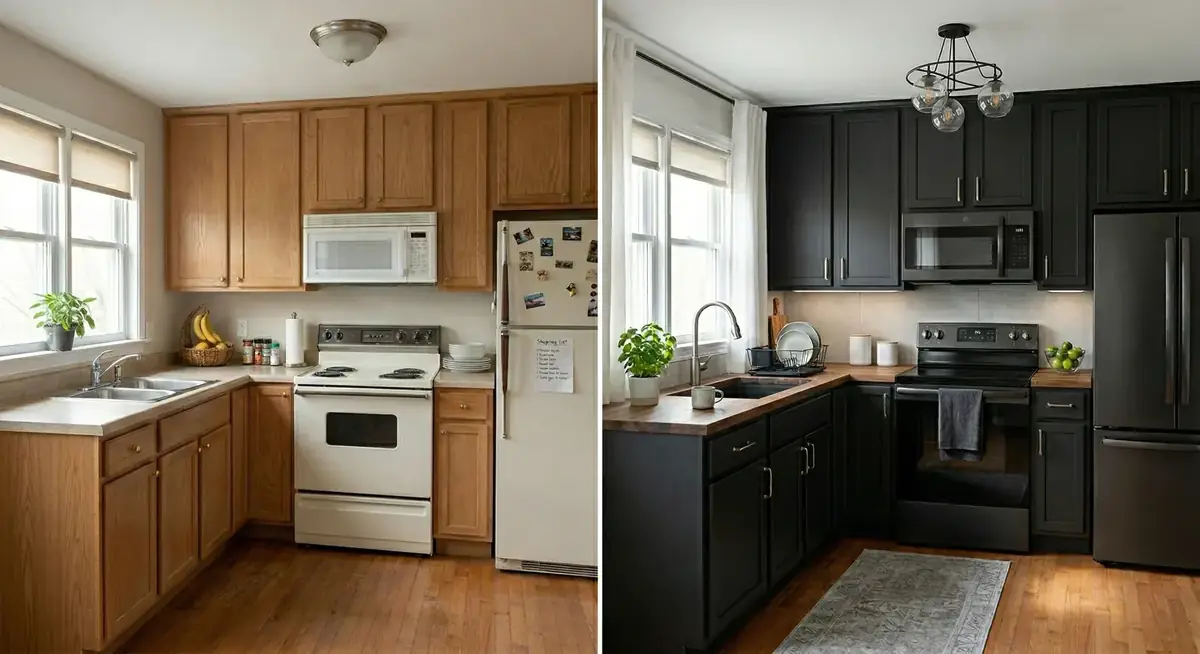
Cosmetic work is exempt under the 2021 Virginia Residential Code. Installing or replacing cabinetry and trim needs no permit. Painting and wallpaper are also exempt.
Swapping plumbing fixtures needs no permit if you do not alter supply, drain, or vent lines. Replacing like-for-like switches, receptacles, lighting fixtures, or ceiling fans is exempt too.
Building Permits
A building permit covers the structure itself. Removing or moving a wall needs one. So does any change to the framing or floor structure.
Trade Permits: Electrical, Plumbing, and Gas
Each trade needs a separate permit application. A project that moves a sink and adds a circuit needs three permits: building, plumbing, and electrical. A new gas line needs a gas permit and a licensed pro.
Historic and Zoning Approvals
Exterior changes in a city historic district may need extra review. Interior kitchen work does not trigger historic review. Check your address on the city's historic-district map to be sure.
| Project | Building permit? | Trade permit? |
|---|---|---|
| Install or replace cabinets or trim | No | No |
| Paint or wallpaper | No | No |
| Swap fixtures without moving supply or drain lines | No | No |
| Replace like-for-like switches, outlets, or lights | No | No |
| Move plumbing lines or add circuits | Yes | Yes |
| Remove or move a wall | Yes | As needed |
| Run a new gas line | Yes | Yes, gas |
| Exterior changes in a historic district | Maybe | Plus historic review |
This table reflects the city's 2021 VRC plan-review rules. When in doubt, ask the permit office before work starts.
How to Get a Kitchen Permit in Richmond: Step by Step
- Define your project scope. List every change: cabinets, plumbing, electrical, walls.
- Check for historic-district rules. Look up your address on the city's historic-district map.
- Hire a licensed contractor. Virginia requires a DPOR contractor license for work valued over $1,000.
- Apply online or in person. Use the EnerGov portal, or visit 900 E Broad St, Room 110.
- Submit complete plans. Include the project address and the contractor's license information. Missing documents cause delays.
- Wait for plan review. Simple trade permits clear faster than structural permits.
- Post the permit on site. Work cannot start before the permit is issued.
- Schedule inspections at each phase. Rough-in inspections come before walls close up.
- Pass the final inspection. Keep the approval paperwork with your home records.
Permit Costs and Timelines
Permit fees vary by project scope and valuation. The city sets fees by permit type. A simple electrical permit costs less than a full structural review. Call (804) 646-4169 for current fee schedules.
Review timelines vary too. Straightforward trade permits often clear in days. Permits involving structural changes take longer because plans need closer review. Build this wait into your project schedule.
Unpermitted work costs more in the end. A stop-work order halts your project on the spot. Missing permits can also stall a future home sale.
Local Angle: City vs County Permit Rules
Richmond is an independent city, not part of any county. Inside city limits, the Bureau of Permits and Inspections handles everything. The office sits at 900 E Broad St, Room 110. Call (804) 646-4169 or use the EnerGov portal.
Henrico County runs its own permit office with its own rules. Chesterfield County does the same. Rules differ across the city line, so always check the office that covers your address.
Planning exterior work on a historic-district home? Read our Fan District historic kitchen remodel guide first. It covers the extra review steps.
Mistakes to Avoid When Permitting a Kitchen Remodel
- Starting work before the permit is issued
- Assuming one building permit covers electrical or plumbing work
- Hiring an unlicensed contractor for work over $1,000
- Skipping the historic-district map check
- Forgetting to schedule inspections at each phase
- Installing a commercial-only gas range, which the 2021 VRC prohibits in homes
- Submitting incomplete plans that send you back to the end of the line
When to Call a Professional
- You plan to move or remove any wall
- The project adds a new gas line or moves an existing one
- Your electrical panel needs an upgrade for new appliances
- You find old wiring like knob-and-tube behind the walls
- Your home sits in a historic district and the project touches the exterior
- You are unsure whether your scope needs a permit at all
Frequently Asked Questions
Do I need a permit to remodel my kitchen in Richmond?
Most cosmetic updates need no building permit. Cabinets, paint, and like-for-like fixture swaps are exempt under the 2021 Virginia Residential Code. Moving walls, plumbing, or electrical lines does need a permit, plus separate trade permits.
What kitchen work does not need a permit in Richmond?
Installing or replacing cabinetry and trim needs no permit. Painting and wallpaper are exempt too. Swapping fixtures without altering supply or drain lines is fine. Like-for-like electrical swaps, such as outlets and light fixtures, are also exempt.
How do I check a contractor's license in Virginia?
Use the official DPOR License Lookup from the Virginia Department of Professional and Occupational Regulation. Confirm active status, license number, business name, and class. Check the specialty and expiration date before you sign anything.
What are Virginia's contractor license classes?
Class C covers single contracts over $1,000 but under $30,000. Class B covers $30,000 to under $150,000. Class A starts at $150,000 per project, or $1 million in any 12-month period. The class depends on contract value, per DPOR.
How long does permit approval take in Richmond?
It depends on the permit type. Simple trade permits often clear in days. Structural permits take longer because plans need closer review. Call the Bureau of Permits and Inspections at (804) 646-4169 for current timelines.
Conclusion
Getting the right permits keeps your kitchen remodel safe, legal, and ready for resale. A local provider who knows Richmond's rules can walk you through the paperwork.
Call 804-555-3729 - Call Now for a free referral to an independent local pro. We connect you with local providers at no cost to you.

Marcus has spent 14 years in Richmond's home remodeling industry, advising homeowners on kitchen and bathroom projects from the Fan District to Short Pump. He reviews every guide on this site for accuracy.